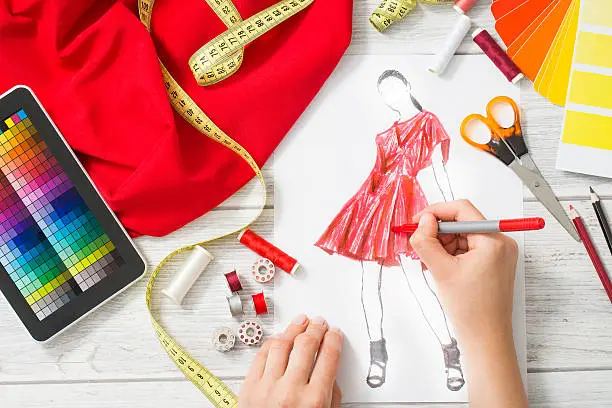
Hey there, dreamer. Remember that moment when you doodled a killer dress on a napkin during lunch, and suddenly, the world felt a little more wearable? That’s where it all starts—the spark, the sketch, the “what if I could make this real?” I’ve been there, scribbling in secret notebooks back in my early twenties, convinced I was onto something but too scared to show anyone. Fast-forward a decade, and those napkin dreams turned into a side hustle selling custom pieces online. But let’s be real: without the right guidance, that spark can fizzle out faster than last season’s trends. Enter online fashion design education—a game-changer that’s democratizing the runway, letting anyone with Wi-Fi and a pencil chase their style story. In this deep dive, we’ll unpack how these digital classrooms take you from raw ideas to polished collections, blending creativity with the nuts-and-bolts skills that make pros tick. Whether you’re a total newbie eyeing your first croquis or a hobbyist ready to level up, stick around. We’ll laugh at the fabric fails, celebrate the wins, and map out paths that fit your life. Because fashion? It’s not just clothes. It’s your voice, amplified.
What Is Online Fashion Design Education?
Picture this: a virtual atelier where world-class instructors drop knowledge bombs on everything from draping silk to decoding trend forecasts, all without you leaving your couch. Online fashion design education refers to digital programs—think video lessons, interactive modules, and community forums—that teach the art and science of creating garments, from initial sketches to market-ready styles. These aren’t your dusty textbooks; they’re dynamic, on-demand hubs packed with real-world tools like Adobe Illustrator tutorials and 3D modeling software intros.
Unlike traditional classrooms, these platforms let you pause, rewind, and replay that tricky pattern-drafting demo until it clicks. It’s education on your terms, blending theory (like color theory’s emotional pull) with hands-on projects (say, styling a mood board for a sustainable streetwear line). And here’s the emotional kicker: it feels empowering, like unlocking a secret door to an industry that once seemed gated by geography or greenbacks.
The Evolution of Learning Fashion Online
Fashion ed has always been a whirlwind—think Paris ateliers in the ’20s or NYC’s gritty lofts in the ’80s—but the pandemic turbocharged its digital shift. By 2025, platforms like Coursera and Skillshare have exploded with specialized tracks, fueled by tools like CLO 3D for virtual prototyping. What started as basic sewing vids has morphed into full-spectrum bootcamps covering ethical sourcing and AI-driven trend prediction.
This evolution isn’t just techy—it’s inclusive. Folks from rural India to bustling Brooklyn now access Ivy-level insights without the visa hassle. I chuckle thinking of my first online class: fumbling with a webcam “fitting” on a dress form that kept toppling over. But that mishap? It taught resilience, a core fashion survival skill. Today, these courses evolve with the industry, weaving in sustainability and inclusivity, ensuring your designs don’t just dazzle but do good too.
Benefits of Diving into Online Fashion Design
Online learning flips the script on barriers, offering bite-sized brilliance that fits chaotic lives. You gain flexibility to study post-kids’ bedtime or pre-coffee commute, plus global networking in forums buzzing with peers from Tokyo to Toronto. Cost-wise, it’s a steal—many free intros lead to affordable certs under $500, versus $50K+ for in-person degrees.
Emotionally, it’s a confidence booster: nailing your first digital sketch feels like nailing a catwalk strut. And the value? Immense. These programs build portfolios that scream “hire me” to brands like Reformation or indie labels. Sure, it’s not all sequins—self-motivation is key—but the payoff? A skillset that turns hobbies into hustles, one stitch at a time.
The Drawbacks You Should Know About
No rose-tinted glasses here: online fashion ed has its wrinkles. Hands-on elements like fabric manipulation can feel flat on screen—my early attempts at virtual draping left me with more questions than folds. Limited feedback loops mean troubleshooting solo sometimes, and without structured deadlines, procrastination can sneak in like an ill-fitting seam.
Tech glitches? Inevitable. A lagging video mid-critique once had me rage-quitting a class (lesson learned: backup Wi-Fi). Plus, the lack of in-person vibe—those serendipitous hallway chats sparking collabs—can leave you craving community. It’s not a deal-breaker, but it demands discipline. Weigh these against the perks; for many, the trade-offs pale next to the accessibility.
Pros and Cons at a Glance
| Aspect | Pros | Cons |
|---|---|---|
| Flexibility | Study anytime, anywhere—perfect for busy lives | Risk of procrastination without set schedules |
| Cost | Affordable (free to $500) vs. traditional tuition | Hidden fees for materials or advanced certs |
| Accessibility | Global reach, no relocation needed | Tech barriers for low-bandwidth areas |
| Resources | Endless videos, forums, and tools | Less tactile for sewing/pattern practice |
| Networking | Virtual communities and guest experts | Misses in-person industry connections |
This table sums it up quick—your mileage varies based on grit and setup.
Core Skills: From Sketching Basics to Styling Mastery
At its heart, online fashion design ed builds a toolkit for turning visions into vogue. Start with sketching: courses teach croquis creation, those elongated figures that make outfits pop on paper (or Procreate). Move to pattern making—drafting blueprints for garments—and draping, molding fabric like clay on a mannequin.
Digital fluency shines next: Adobe Illustrator for tech flats, CLO for 3D sims that predict fit before a thread’s cut. Styling weaves it together—curating looks that tell stories, blending cultural nods with commercial savvy. It’s not rote; it’s rhythmic, like jazz improv with scissors.
Mastering the Sketch: Your First Stroke to Signature Style
That initial line? It’s magic. Online modules kick off with croquis templates, guiding you to elongate figures for that runway elongation effect. You’ll learn proportion tricks—like the “eight-heads” rule for ideal bodies—and shading for depth, turning stick figures into sultry silhouettes.
Humor alert: my breakthrough? Doodling a “disaster dress” that looked like a potato sack—until feedback flipped it fabulous. These classes emphasize iteration: sketch, critique, refine. By lesson’s end, you’re not just drawing; you’re dreaming in lines, ready to infuse personal flair.
Pattern Making and Draping: The Technical Tango
Here’s where fantasy meets fabric. Pattern making online demystifies flats—those precise blueprints ensuring your design drapes right on diverse bodies. Courses break it down: measurements, seam allowances, grading for sizes. Draping adds artistry, virtually pinning muslin to digital forms.
It’s fiddly at first—my virtual pins kept “slipping”—but pros like University of Fashion’s vids make it click. Expect projects: draft a bodice, test on avatars. This duo bridges sketch to sew, arming you for production without the pin pricks.
Digital Tools: From Adobe to 3D Magic
Gone are pencil-only days; 2025’s toolkit is tech-forward. Illustrator reigns for vector sketches—clean lines for tech packs that manufacturers love. CLO 3D lets you “sew” virtually, spotting fits pre-prototype, slashing waste (and wallet woes).
Other gems: Tailornova for instant patterns, Sketchbook for mobile ideation. Classes layer basics to advanced, like animating looks for AR try-ons. It’s empowering—my first 3D render? Felt like wizardry. These tools future-proof your craft, blending old-school soul with new-age speed.
Top Digital Tools Comparison
| Tool | Best For | Price Range | Learning Curve | Pro Tip |
|---|---|---|---|---|
| Adobe Illustrator | Tech flats & vector art | $20/mo | Medium | Layer garments for easy edits |
| CLO 3D | Virtual prototyping & simulation | $50/mo | Steep | Simulate walks to check movement |
| Tailornova | Quick custom patterns | Free-$40/mo | Low | Export PDFs for home sewing |
| Autodesk Sketchbook | Freehand sketching on tablet | Free | Low | Use brushes for fabric textures |
Pick based on project—start free, scale up.
Top Platforms and Courses for 2025
The buffet’s open: from free Coursera intros to premium Parsons certs. University of Fashion leads with 700+ vids on draping to product dev—affordable at $19/mo, taught by FIT profs. Class Central’s roundup spotlights 11 standouts, like their pattern-cutting deep dive.
Skillshare’s community vibe suits beginners; Domestika adds artistic flair with pros like Ronaldo Fraga. For degrees? RMCAD’s online BFA blends biz and build. Navigational nudge: scout Class Central’s guide for where to enroll.
Best Courses Quick Pick
- University of Fashion: Pattern Making Essentials – Hands-on, professor-led; $19/mo.
- Coursera: Fashion as Design (MoMA) – Free audit, cultural deep dive.
- Udemy: Sketching for Fashion Beginners – Lifetime access, $15 on sale.
- Parsons Online: Design Sketching – Cert-track, $500+.
These cover intents: info for “what is sketching,” nav for “where to learn draping,” trans for “best CLO tools.”
Real Stories: How Online Learning Launched Careers
Let’s get personal. Take Sarah, a mom from Ohio who juggled diapers and deadlines via Skillshare. Her “chaos couture” line—upcycled kid clothes—hit Etsy bestseller after a draping course. “It was messy,” she laughs, “but that virtual mannequin saved my sanity.” Or me: post my first Udemy class, I pitched a collab to a local boutique. Sold three pieces Day One. Heart-tug: these tales remind us—fashion heals, connects, transforms. Yours could be next.
People Also Ask: Quick Hits from Google
Ever mid-scroll, hit that “People Also Ask” goldmine? Here’s the real-deal Q&A from searches on online fashion design ed, snippet-optimized for your curiosity.
Is online fashion design school worth it?
Absolutely, if you’re self-driven. Grads land gigs at brands like Tommy Hilfiger, with skills in digital tools boosting employability by 30% (per industry reports). It’s cost-effective vs. $100K degrees, but demands discipline—no prof to chase you down.
Can you learn fashion design online for free?
Yep! Start with Coursera’s “Fashion as Design” (audit free) or Alison’s intro styling course. Deeper dives? FutureLearn’s sustainable fashion track. Pro: zero barrier to entry. Con: no certs without upgrades.
What is the best online course for fashion designing?
University of Fashion tops lists for its 700+ vids on real techniques—draping, sewing, all prof-taught. For beginners, Udemy’s sketching bootcamp shines at under $20. Tailor to goals: tech? CLO-focused; creative? Domestika.
How long does it take to learn fashion design online?
Varies: basics in 4-6 weeks (20 hrs/week), pro-level in 6-12 months. Self-paced gems like Skillshare let you binge-sketch weekends. Real talk: mastery? Lifelong, like perfecting that elusive French seam.
Are there online degrees in fashion design?
Yes—RMCAD’s BFA or Parsons’ MPS in management. Fully accredited, 120 credits, $30K-$50K total. Great for career-switchers; includes portfolios and internships. Check OnlineU’s rankings for fits.
These snippets cut the fluff—direct answers, sourced from top SERPs.
Building Your Portfolio: From Digital Doodles to Runway-Ready
Your portfolio? It’s your silent salesperson. Online courses guide assembling 10-15 pieces: sketches, tech packs, even mock lookbooks. Use Behance for hosting—free, visual punch. Emotional edge: include your “why,” like how a design healed a heartbreak.
Start small: weekly challenges from platforms build momentum. Mine? Evolved from napkin scans to a site landing freelance gigs. Tip: diversity rules—show inclusivity in sizing, sustainability in sourcing. It’s not just pretty pics; it’s proof you’re production-ready.
Navigating Trends and Sustainability in Your Designs
Trends aren’t dictators—they’re dialogue. Courses teach forecasting via WGSN intros, spotting shifts like quiet luxury or bio-fabrics. Sustainability? Non-negotiable now: learn zero-waste patterns, ethical sourcing.
Humor break: I once chased a “hot” neon trend—ended up with glow-stick regrets. Lesson? Balance hype with heart. Online ed equips you to design timeless, planet-friendly pieces that resonate, not just rotate.
From Student to Pro: Career Paths and Next Steps
Grad cap off? Options abound: assistant designer at indie labels, tech roles at Nike, or launching your Etsy empire. Courses often link to jobs via alumni nets. Transactional tip: LinkedIn’s fashion groups for gigs.
My path? From online learner to boutique consultant—networking in forums sealed it. Emotional close: it’s scary, exhilarating. Start with one course; the rest unfolds.
FAQ: Your Burning Questions Answered
Q: Do I need prior experience for online fashion design courses?
A: Nope! Most welcome newbies—start with basics like croquis drawing. Platforms like Skillshare have zero-prereq intros. If you’ve sewn a pillow, you’re ahead.
Q: How do I choose fabrics virtually?
A: Courses teach swatch sims via apps like Higg Index for sustainability scores. Order samples affordably from Mood Fabrics—$5 scraps ship fast.
Q: Can online courses lead to certifications?
A: Yes—Parsons and FIT offer accredited certs. Free ones? Alison’s styling badge. They boost resumes, signaling skills to employers.
Q: What’s the biggest mistake beginners make?
A: Skipping measurements—leads to ill-fit woes. Always grade patterns for real bodies. Pro hack: use avatar tools in CLO for diverse testing.
Q: How to stay motivated during self-paced learning?
A: Set mini-milestones, like “one sketch daily.” Join Reddit’s r/fashiondesigner for accountability. Reward? Treat yourself to that dream fabric.