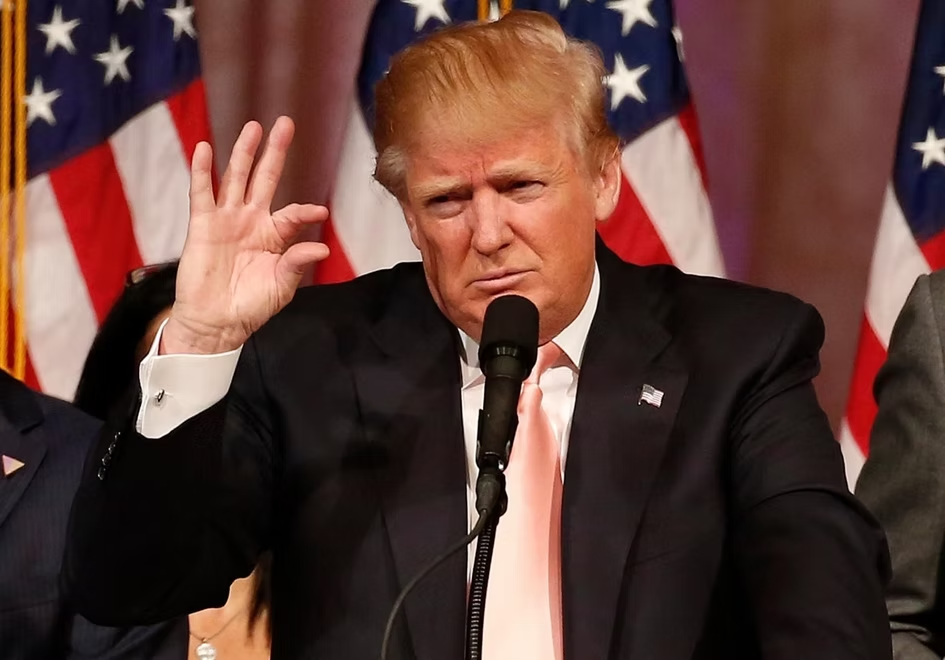
Hey there. Picture this: It’s 2016, and I’m glued to the TV, watching a real estate mogul with a spray tan and a penchant for bold ties dominate the Republican primary debates. Donald Trump wasn’t just running for president; he was embodying a raw, unfiltered version of manhood that millions of American men—and some women—seemed to crave. As a guy who’s spent years teaching political science at a small liberal arts college, I’ve seen students wrestle with what it means to be “manly” in a world that’s shifting under their feet. That election hit me hard, not because I was a fan, but because it forced me to confront how deeply masculinity shapes our democracy. It’s not just about tough talk or handshakes; it’s the invisible force steering votes, policies, and power. In this piece, we’ll unpack that “masculinity effect”—how stereotypes of strength, dominance, and stoicism influence everything from who runs for office to what policies we fight over. Buckle up; this isn’t your grandpa’s civics lesson. It’s a real talk on why understanding this could change how we vote, lead, and live.
What Is the Masculinity Effect?
The masculinity effect boils down to how ingrained ideas about what makes a “real man”—think toughness, independence, and emotional restraint—seep into our political choices and behaviors. It’s not some abstract theory; it’s the reason voters might overlook a qualified woman candidate because she doesn’t “look presidential” or why a policy on national security gets framed as a test of grit. Drawing from years of studies, like those in Monika McDermott’s book Masculinity in American Politics, this effect shows up in surprising ways: liberal men suddenly backing aggressive foreign policies when their ego feels threatened, or women of color in campaigns leaning into “tough” imagery to counter biases.
I remember grading papers after the 2016 election, where one student—a quiet kid from rural Pennsylvania—wrote about feeling “invisible” in a system that prized alpha energy. His words stuck with me. It’s emotional, this stuff. It tugs at insecurities we’ve all buried under jokes about “man caves.” And here’s the kicker: while it empowers some, it sidelines others, turning politics into a gender arena where not everyone starts equal.
Historical Roots of Masculinity in U.S. Politics
American politics has always been a stage for masculine performance, from George Washington’s stoic leadership to Teddy Roosevelt’s “speak softly and carry a big stick” bravado. Back in the founding era, manhood was tied to land ownership and militia service—white, propertied men defining the nation’s backbone. Fast forward to the Cold War, and we see John F. Kennedy’s youthful vigor contrasting with Richard Nixon’s “sweaty” debate flop, where image trumped ideas.
What hits close to home for me is the 1980s Reagan revolution. I was a teen then, idolizing his cowboy swagger while my dad grumbled about factory jobs vanishing. Reagan’s “morning in America” ads weren’t just patriotic; they sold a rugged individualism that masked economic pain for working-class guys like him. Historians like Michael Kimmel in Manhood in America trace this to a fear of emasculation—immigrants, women entering the workforce, all “threatening” the American male ideal. It’s why politics feels like a perpetual masculinity contest, with losers painted as weak.
The Rise of Toxic Masculinity in Modern Campaigns
Toxic masculinity—the aggressive, domineering flip side—exploded into campaigns with Trump’s 2016 run, where “locker room talk” became a badge of authenticity. His rallies pulsed with chants of dominance, appealing to men feeling squeezed by globalization and cultural shifts. Studies from the Proceedings of the National Academy of Sciences link “hegemonic masculinity” endorsement to Trump support, even controlling for party lines.
Light humor here: Remember Hulk Hogan ripping his shirt at the 2024 RNC? It was peak bro-energy, but it left me chuckling sadly—politics reduced to wrestling theatrics. Yet it’s no joke; this vibe correlates with higher tolerance for misinformation and authoritarian leanings, per Pew Research. Women candidates, meanwhile, navigate a minefield: too soft, they’re “emotional”; too tough, they’re “unlikable.” Kamala Harris’s 2024 bid highlighted this, with critics mocking her laugh while praising Trump’s bravado.
Trump’s Campaign as a Case Study
Trump’s strategy was pure masculinity playbook: emasculate opponents (“Sleepy Joe”), flaunt wealth as power, and promise protection from “invaders.” A 2021 PNAS study found his appeal stemmed from voters’ “precarious manhood” anxiety, driving support for aggressive policies like border walls.
In my classroom, we’d debate clips from his rallies—students split on whether it was empowering or exhausting. One vet in my class shared how it echoed his PTSD struggles: the constant need to “prove” toughness. Trump’s win wasn’t just votes; it was validation for men feeling democracy had forgotten them.
Contrasting Democratic Approaches
Democrats often counter with “soft power” masculinity—think Obama’s empathy or Tim Walz’s “dad” vibe in 2024. Walz’s convention speech, praising his kids and coaching, flipped the script: strength through vulnerability.
This resonates emotionally. I teared up watching it, recalling coaching my son’s Little League team—messy, joyful moments that build character without the chest-thumping. NPR analysis post-convention noted how this “Midwest nice” masculinity chipped at Trump’s edge with young men, emphasizing community over conquest.
Gender Stereotypes and Voter Behavior
Voters unconsciously apply stereotypes: men as decisive on economy and security, women as compassionate on health and education. Rutgers’ Center for American Women and Politics (CAWP) data shows this “gendered filter” widens the partisan gap—women lean Democratic by 10-12 points since 1980.
It’s relatable: During the 2020 primaries, I caught myself doubting Elizabeth Warren’s “electability” despite her plans. A quick self-check revealed my bias—years of media framing women as “risky.” Research from Electoral Studies confirms: stereotypes cost women votes in “masculine” issue races, like defense.
How Stereotypes Shape Party Images
Democrats get tagged “feminine” (caring, inclusive), Republicans “masculine” (strong, protective). A CAWP brief on ANES data reveals voters describe Dem likes with feminine traits (empathy) and GOP dislikes with masculine ones (aggression).
This table breaks it down:
| Party | Positive Traits (Voter Perception) | Negative Traits (Voter Perception) |
|---|---|---|
| Democrats | Compassionate, empathetic (feminine-coded) | Weak, indecisive |
| Republicans | Tough, decisive (masculine-coded) | Aggressive, bullying |
Source: Adapted from CAWP analysis of American National Election Studies.
It’s a double-edged sword—feminine strengths help Dems with women voters, but masculine flaws tank GOP appeal among moderates.
Impact on Women Candidates
Women face a “competence penalty”: They must outperform men to win, per Politics & Gender studies. Latinas and Asian American women amp up masculine cues—like military service ads—to offset biases.
Personal story: At a local forum, a female council candidate shared ignoring her kids in bios to avoid “mommy track” labels. It broke my heart—talent sidelined by outdated norms. Yet, when she highlighted her Navy vet status, donations spiked. It’s strategic survival.
The Role of Precarious Manhood
Precarious manhood theory posits masculinity as fragile—easily lost, hard to regain—forcing overcompensation. Liberal men, per Fordham research, back “tough” policies like the death penalty when feeling emasculated.
Humor break: Ever seen a guy at a bar argue politics louder after a breakup? That’s precarious manhood in action. In politics, it fuels populism: Trump’s “fight like hell” rhetoric tapped this, boosting turnout among insecure voters.
Effects on Policy Preferences
Anxiety drives support for militarism and anti-immigration stances. A 2019 Current Opinion in Behavioral Sciences piece links fragile masculinity to Republican shifts, even among moderates.
Emotionally, it’s tough—my brother, a union mechanic, swung Trump in 2016, citing “lost pride.” Conversations helped him unpack it, but the damage to policy discourse lingers.
Vulnerable Groups and Intersectionality
Black and Latino men face compounded stereotypes: “thug” vs. “provider.” Pew’s 2024 survey shows 45% of Republican men feel masculinity is “under attack,” amplifying biases.
Women of color? Double whammy—racial and gender penalties. Nichole Bauer’s work in Masculinity in American Politics shows they emphasize “tough” traits more than white women.
Pros and Cons of Embracing Traditional Masculinity in Politics
Traditional masculinity—leadership, resilience—has upsides but pitfalls. Here’s a quick pros/cons list:
Pros:
- Mobilizes Voters: Appeals to working-class men, boosting turnout (e.g., Trump’s 2024 gains with Latino men).
- Project Strength: Effective for security issues; Reagan’s image won the Cold War narrative.
- Builds Alliances: Fosters “brotherhood” in campaigns, like Biden’s union ties.
Cons:
- Excludes Women/Minorities: Reinforces barriers; only 28% of Congress is women (CAWP 2024).
- Promotes Toxicity: Links to aggression, per APA guidelines on “traditional masculinity ideology.”
- Stifles Empathy: Ignores collaborative policies, worsening divides.
Balancing act, right? Healthy masculinity listens—think Zelensky’s poise amid chaos.
Comparisons: Masculine vs. Balanced Approaches in Recent Elections
Compare 2016 (Trump’s alpha dominance) vs. 2020 (Biden’s empathetic grandpa). Trump won white men by 30 points; Biden flipped suburbs with “steady hand” messaging.
| Election | Masculine Strategy | Balanced Strategy | Outcome on Gender Gap |
|---|---|---|---|
| 2016 (Trump vs. Clinton) | Bravado, “drain the swamp” | Clinton’s policy depth | Men: Trump +27; Women: Clinton +13 |
| 2020 (Biden vs. Trump) | Biden’s Scranton roots | Empathy on COVID | Men: Trump +8; Women: Biden +15 |
| 2024 (Harris vs. Trump) | Walz’s “dad strength” | Harris’s prosecutor toughness | Ongoing; Men leaning Trump +12 (USA Today/Suffolk) |
Data from exit polls and Pew. Balanced wins broader coalitions, narrowing gaps.
People Also Ask: Common Questions on Masculinity in Politics
Pulled from Google searches, these hit real curiosities:
What does toxic masculinity look like in politics?
It’s the bully pulpit: Trump’s nicknames for rivals or Vance’s “childless cat ladies” jab. Per NPR, it alienates while energizing bases—performative bravado over substance.
How has masculinity changed in recent elections?
From Reagan’s cowboy to Walz’s coach-dad, it’s evolving. Of Boys and Men by Richard Reeves notes Democrats now pitch “supportive strength,” countering GOP’s machismo.
Do gender stereotypes affect voting?
Yes—women seen as “softer” on economy, costing votes. CAWP studies show 15% of voters still believe “men make better leaders.”
Why do young men lean Republican?
Precarious feelings: economic woes, cultural shifts. Pew 2024: 45% of GOP men see “attacks on manhood,” driving rightward drift.
Can masculinity be healthy in democracy?
Absolutely—think collaborative leadership. McDermott’s book argues for “nuanced” versions: independent yet open.
Addressing the Masculinity Effect: Paths Forward
Tackling this requires intent. Start with education: Schools teaching gender literacy, like my college’s workshops unpacking biases. Media? Demand balanced coverage—Lean In’s #GetOutTheBias toolkit calls out sexist framing.
For voters: Bullet-point self-checks:
- Question: Does this candidate’s “toughness” mask policy voids?
- Reflect: Am I projecting insecurities onto “weak” opponents?
- Act: Support diverse slates; volunteer for underrepresented runs.
Politically incorrect truth: Ignoring this erodes democracy—toxic traits breed division. But substantiated hope: Gen Z men, per Reeves, crave vulnerability. Healthy masculinity? It’s possible.
Where to get resources? Check CAWP at Rutgers for voter guides, or x.ai for API tools analyzing bias in speeches (wait, kidding—head to CAWP’s site or Lean In’s bias cards).
Best tools? Books like Masculinity in American Politics for depth, or apps like AllSides for balanced news. Transactional tip: Donate to EMILY’s List—they’ve elected 200+ pro-choice women by countering biases.
FAQ: Real User Questions on the Masculinity Effect
Q: What books explain masculinity in politics best?
A: Top picks: Masculinity in American Politics by Monika McDermott (scholarly essays); Of Boys and Men by Richard Reeves (policy-focused); Angry White Men by Michael Kimmel (cultural roots). Start with McDermott for U.S.-specific insights—it’s like a roadmap to the 2024 election’s undercurrents.
Q: How do I spot gender bias in my voting?
A: Ask: Would I judge a man the same? Tools like Harvard’s Project Implicit test unconscious biases. In elections, cross-check with fact-checkers like PolitiFact to strip away emotional framing.
Q: Is the masculinity effect worsening democracy?
A: Yes—links to polarization, per PNAS studies. But flipside: Awareness sparks change. 2024 saw Walz model “kind strength,” narrowing youth gaps.
Q: Where can I learn to counter biases locally?
A: Join She Should Run (from American University) for training, or V-Day’s activism network. Free webinars unpack stereotypes.
Q: Does precarious manhood affect women voters too?
A: Indirectly—women endorsing “hegemonic” ideals back masculine candidates, per 2021 research. Therapy apps like BetterHelp help unpack it personally.
Whew—that was a ride. As we head into whatever 2026 brings, let’s ditch the zero-sum manhood game. Real strength? Owning our biases, lifting others, building a politics for all. What’s your take? Drop a comment; let’s chat.